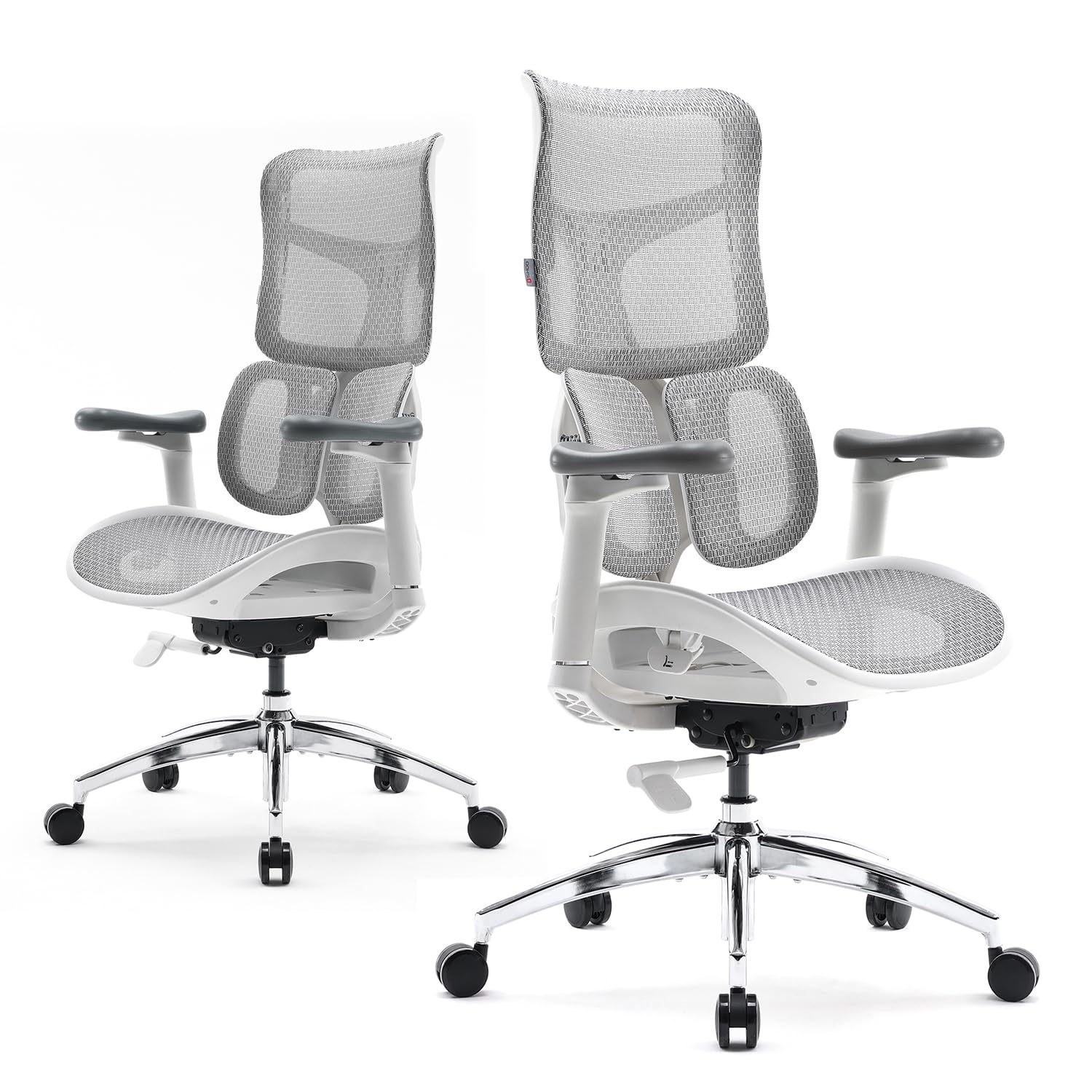
The SIHOO Doro S100 stands out for its spring-assisted dual lumbar support and multiple ways to tune its fit.
This sihoo s100 chair review looks at how its backrest, seat depth, and coordinated armrests may suit a home office routine.
Doro S100 Review Summary
The quick verdict
100+ ratings
Read Amazon ReviewsSIHOO Doro S100
A mesh office chair for desk workers who want adaptable lumbar support, a height-adjustable backrest, and coordinated armrests.
- Dual dynamic lumbar support uses a four-spring adaptive mechanism and is described as offering 6D adjustment as it responds to changing posture.
- The 4D armrests adjust vertically by up to 2.76 inches, move forward or backward by up to 1.18 inches, and angle inward or outward by up to 72 degrees.
- Armrests coordinate with the backrest while reclining, keeping them linked to the chair's movement.
- The mesh backrest has an independently adjustable upper section with five positions.

Pros
- Dynamic lumbar support is designed to follow posture changes instead of relying on a single fixed pad.
- Separate upper-backrest adjustment helps accommodate differences in torso height.
Consider before buying
- The many adjustment points may take time to tune, especially for someone who prefers a simple chair with few controls.
- The supplied fit details do not include seat width or seat-height range, so buyers should confirm those measurements before ordering.
Read the full review summary
The Doro S100 combines a mesh back with a dual-wing lumbar mechanism designed to move as your posture changes.
Its independently adjustable upper backrest has five positions, while the seat depth shifts by up to 1.97 inches, giving buyers several ways to tune where the chair supports their back and thighs.
Its feature set is aimed at people who spend substantial time at a desk and want adjustment across the back, seat, and arms rather than a basic fixed setup.
The listed height range of 5 feet to 6 feet 3 inches provides a useful starting point, though body proportions and desk fit still matter; check the chair dimensions and adjustment range against your own measurements before choosing.
The buying factors
Doro S100 Scorecard
Editorial scores reflect listed features and buyer fit; they are not laboratory measurements or customer ratings.
Lumbar adjustability
The dual dynamic support uses four springs and is described as adapting to different body shapes and postures.
Backrest fit
Five upper-backrest positions offer a meaningful adjustment path, with a stated user-height range from 5 feet to 6 feet 3 inches.
Armrest flexibility
The 4D armrests adjust vertically, front to back, and inward or outward, and coordinate with reclining.
Seat-depth tuning
A 1.97-inch range gives some ability to adapt thigh support to leg length.
Recline flexibility
The backrest reclines up to 135 degrees, providing a change of posture between upright work and leaning back.
Fit confidence
Several useful adjustments are specified, but the supplied details do not give seat width, seat height, or overall dimensions for a precise fit check.
Key Features and Specifications of Doro S100
- Dual dynamic lumbar support uses a four-spring adaptive mechanism and is described as offering 6D adjustment as it responds to changing posture.
- The 4D armrests adjust vertically by up to 2.76 inches, move forward or backward by up to 1.18 inches, and angle inward or outward by up to 72 degrees.
- Armrests coordinate with the backrest while reclining, keeping them linked to the chair's movement.
- The mesh backrest has an independently adjustable upper section with five positions.
- Seat depth adjusts by up to 1.97 inches, and the cushion has a waterfall-shaped front edge.
- The recline angle reaches up to 135 degrees; the chair is described for users from 5 feet to 6 feet 3 inches.
Pros and Cons of Doro S100
Pros
- Dynamic lumbar support is designed to follow posture changes instead of relying on a single fixed pad.
- Separate upper-backrest adjustment helps accommodate differences in torso height.
- Armrests offer multiple directions of adjustment and coordinate with recline.
- Seat-depth adjustment can help tailor thigh support to different leg lengths.
Consider before buying
- The many adjustment points may take time to tune, especially for someone who prefers a simple chair with few controls.
- The supplied fit details do not include seat width or seat-height range, so buyers should confirm those measurements before ordering.
- A maximum recline of 135 degrees may not suit buyers who want a deeper lounge position.
Who Should Buy Doro S100?
Good fit
Consider the Doro S100 if you want a task chair whose lower-back support, upper backrest, armrests, and seat depth can all be adjusted.
That combination is especially relevant if a fixed lumbar pad tends to sit too high or low, or if you share a chair with someone whose proportions differ from yours.
The height guidance spans 5 feet to 6 feet 3 inches, but treat that as a broad fit guide rather than a guarantee.
Compare your thigh length and preferred desk posture with the seat-depth range, and confirm seat height and width before buying if those are important constraints.
It also makes sense for desk users who change position during the day.
The coordinated arms and 135-degree maximum recline support a shift away from upright typing, while remaining oriented toward work and study rather than a deeply reclined lounge setup.
Who should skip it
Look elsewhere if you specifically need a chair that reclines beyond 135 degrees or want a footrest as part of the setup; those needs are not addressed by the S100's described design.
If you cannot verify the seat dimensions and height range against your workstation, pause before choosing. Fit depends on more than the stated user-height span.
How the Doro S100's Adjustments Shape Everyday Fit
A lumbar system built for posture changes
The dual-wing lumbar assembly is the chair's defining feature. Its spring-based adaptive design is intended to move with different postures, which may be useful for people who alternate between upright work and leaning back.
The practical question is whether the support lands comfortably at your lower back; an adaptive mechanism still needs to suit your body and preferred sitting position.
Backrest and seat adjustments work on different dimensions
The five-position upper backrest adjusts the shoulder and neck area, while seat-depth adjustment changes how much of the thigh is supported.
These controls address different fit issues, so together they offer more scope for tailoring the chair than either adjustment alone. Make changes in small increments and check that your feet remain comfortably supported at your normal desk height.
Arm movement during recline
The 4D armrests move vertically, forward and backward, and inward or outward; the design also coordinates them with the reclining backrest. This can help maintain a more consistent place to rest your arms as you shift posture.
Buyers should still check that the armrest width and height work with their desk and typing position.
A work-focused recline range
The stated maximum recline is 135 degrees, enough to offer a noticeable change from upright seating without positioning the S100 as a deep-recline chair.
The mesh back and waterfall-shaped cushion round out the fit-oriented design, but material labels and ergonomic features cannot establish how the chair will feel over a full workday for every person.
Alternatives to Doro S100
Home Office Desk Chairs alternative
17,000+ ratings
Read Amazon ReviewsSIHOO M57 Ergonomic Office Chair
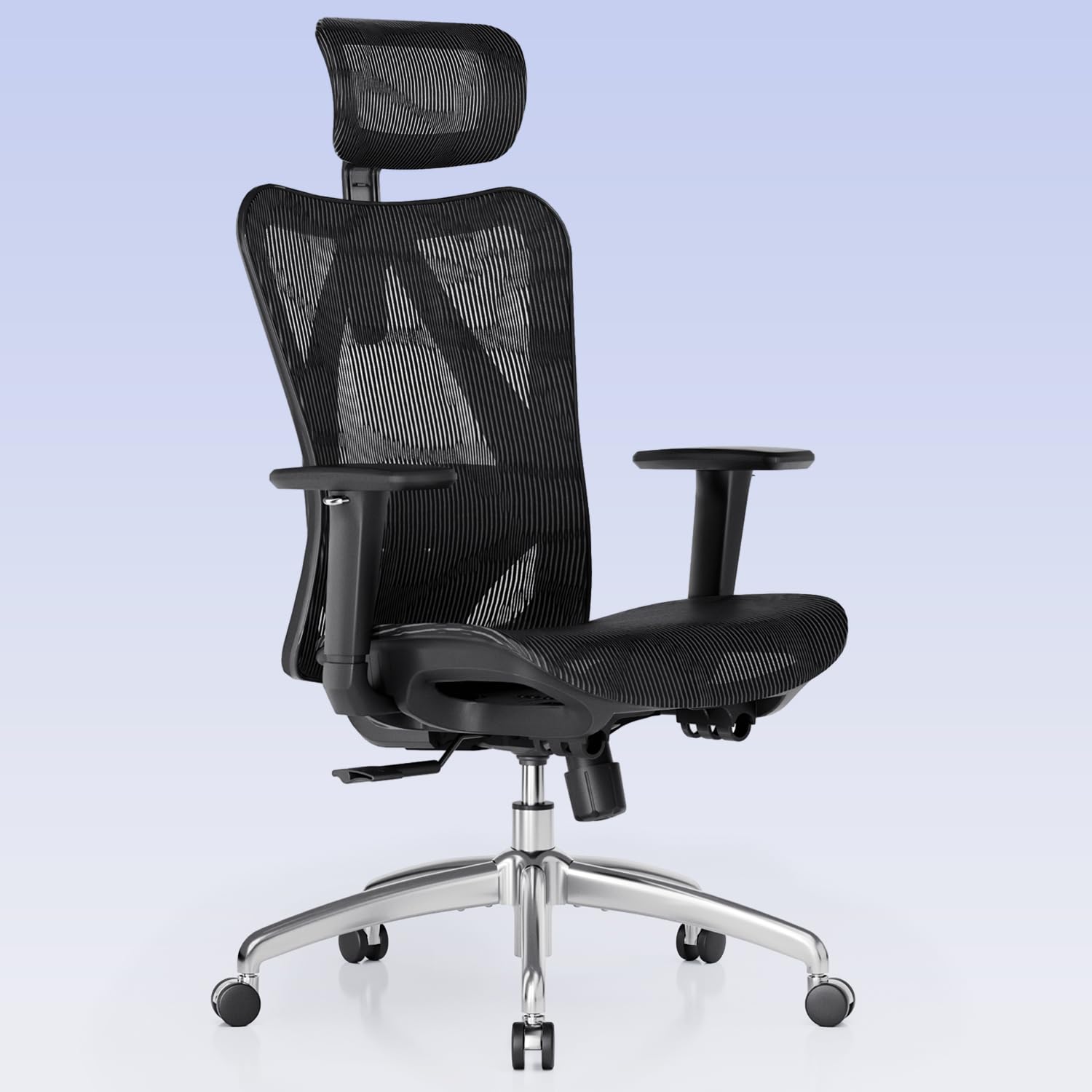
Consider the M57 if an adjustable headrest and explicitly stated load capacity matter more to you than the S100's five-position upper backrest and armrests that coordinate with recline.
The S100 is the closer fit for buyers prioritizing those particular adjustment features.
- The M57 has a height- and depth-adjustable lumbar support, adjustable headrest, split backrest, and recline from 90 to 126 degrees. Its description also gives a 330-pound capacity.
- The Doro S100 offers dual dynamic lumbar support, a five-position adjustable upper backrest, seat-depth adjustment, and coordinated 4D armrests.
Home Office Desk Chairs alternative
17,000+ ratings
Read Amazon ReviewsSIHOO B100 Office Chair
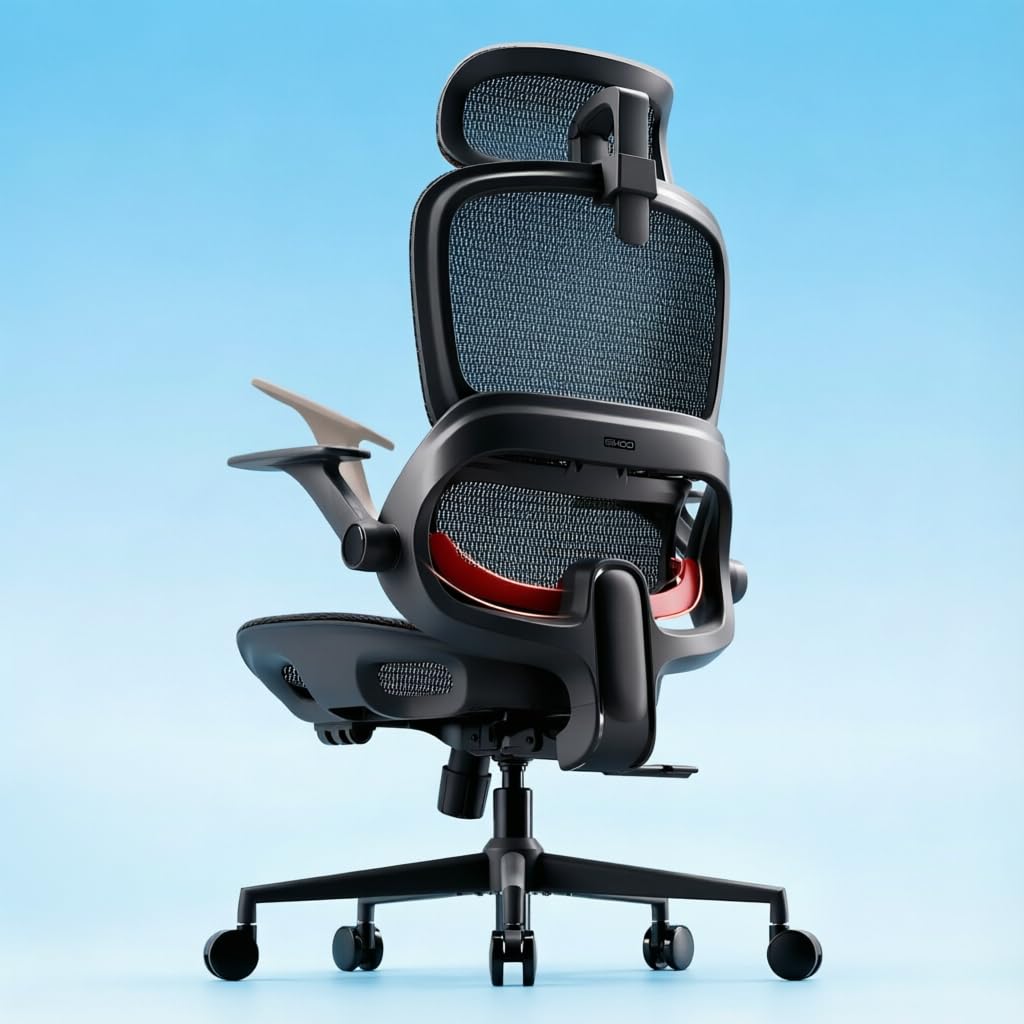
The B100 may suit a compact desk setup where flip-up arms and a wide headrest are priorities. Choose the S100 if you prefer its independently adjustable upper backrest, seat-depth adjustment, and more directional armrest tuning.
- The B100 offers three recline angles up to 135 degrees, an extra-wide 2D headrest, and flip-up armrests that adjust with the recline; its description gives a 300-pound capacity.
- The Doro S100 combines a five-position upper backrest with adjustable seat depth and 4D coordinated armrests.
Is Doro S100 Worth It?
The SIHOO Doro S100 is worth considering if you want a mesh home-office chair with a strong range of fit adjustments.
Its dual dynamic lumbar support is the central draw, backed by a five-position upper backrest, adjustable seat depth, and coordinated 4D armrests.
Before buying, verify the seat dimensions and height range for your body and desk, since the supplied details do not provide those measurements.
If they fit and your preferred recline is within 135 degrees, the S100 offers a coherent set of adjustments for everyday desk work.
Your review at a glance
100+ ratings
Read Amazon ReviewsSIHOO Doro S100
A mesh office chair for desk workers who want adaptable lumbar support, a height-adjustable backrest, and coordinated armrests.
- Dual dynamic lumbar support uses a four-spring adaptive mechanism and is described as offering 6D adjustment as it responds to changing posture.
- The 4D armrests adjust vertically by up to 2.76 inches, move forward or backward by up to 1.18 inches, and angle inward or outward by up to 72 degrees.
- Armrests coordinate with the backrest while reclining, keeping them linked to the chair's movement.
- The mesh backrest has an independently adjustable upper section with five positions.